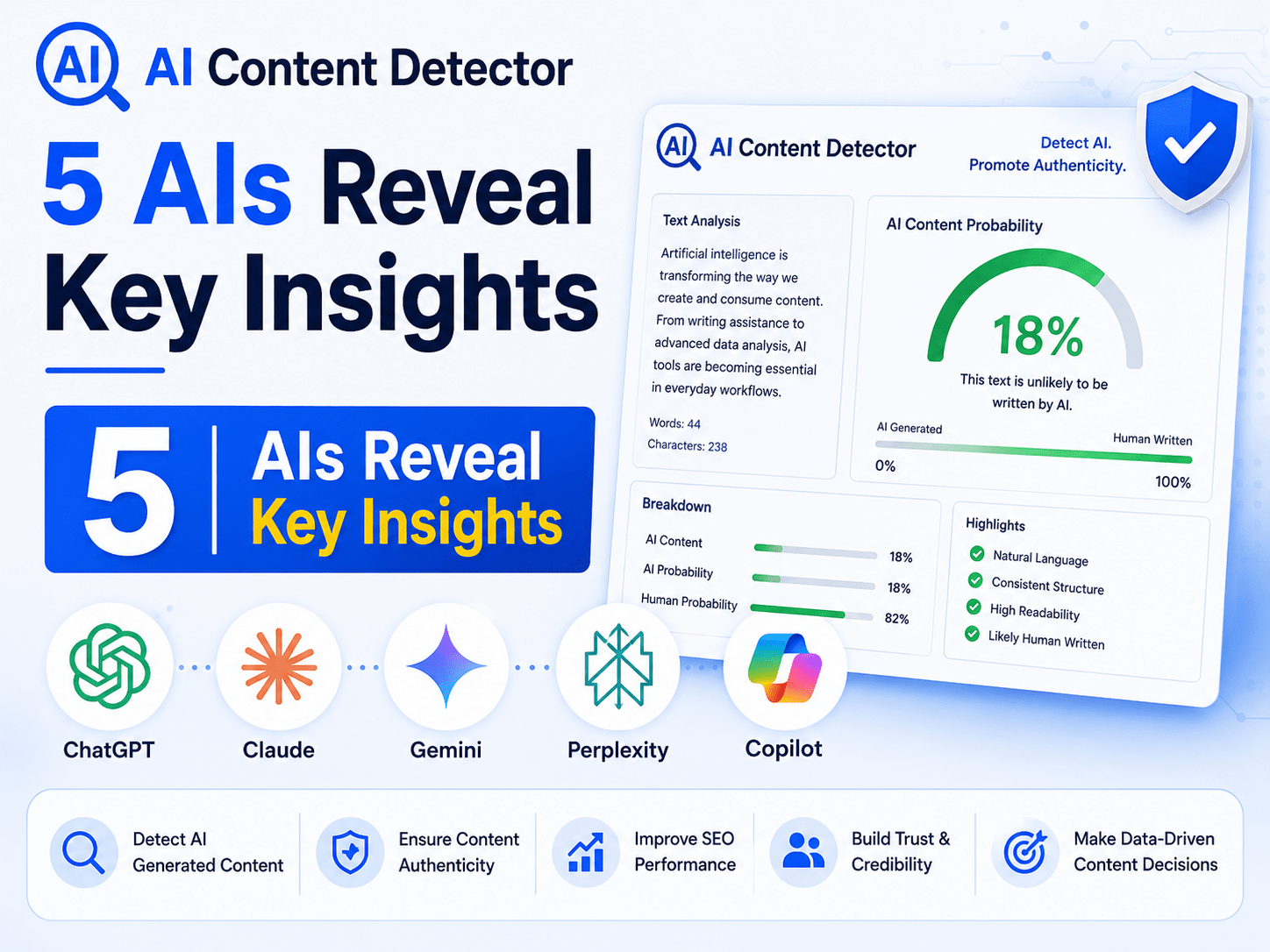
What do 5 leading AI models say about AI museums 2030? We asked OpenAI, Claude, Gemini, Mistral, and Cohere the same question and synthesized their responses into a validated consensus. Here’s what they agreed on—and where they differed.
This comprehensive analysis explores the future of museums through the lens of artificial intelligence. By examining perspectives from multiple AI systems, we provide a balanced view of how museums will evolve and what professionals need to know to stay ahead.
The Question Asked
How will AI change museums by 2030?
|
5
AI Models
|
65%
Avg Confidence
|
97
Champion Score
|
MODERATE
Agreement
|
What Is the AI Consensus on Ai Museums 2030?
By 2030, AI will fundamentally transform museums across three key dimensions. First, visitor experiences will become deeply personalized through AI-powered guides, recommendation systems, and dynamic content delivery that adapts to individual interests, learning styles, and real-time engagement patterns. Museums will deploy immersive technologies including AR/VR, holographic exhibits, and interactive storytelling that bring artifacts and historical narratives to life.
Second, accessibility will dramatically improve through real-time multilingual translation, audio descriptions for visually impaired visitors, sign language interpretation, and remote/virtual access enabling global participation. Third, operational efficiency will increase through AI-driven predictive maintenance, automated inventory management, smart resource allocation, and data analytics for crowd management and demand forecasting.
However, this transformation requires careful consideration of ethical implications including authenticity concerns, potential workforce displacement, data privacy protections, and the need for inclusive, unbiased AI deployment. Museums must invest strategically in AI integration, establish partnerships with technology experts, develop clear ethical guidelines, and prioritize workforce retraining.
The result will be institutions that balance technological innovation with their core mission of cultural preservation and public education, creating more engaging, accessible, and sustainable experiences while maintaining trust and authenticity.
🎯 5 Key Insights from 5 AI Models
- ✔ By 2030, AI will fundamentally transform museums across three key dimensions.
- ✔ First, visitor experiences will become deeply personalized through AI-powered guides, recommendation systems, and dynamic content delivery that adapts to individual interests, learning styles, and real-time engagement patterns.
- ✔ Museums will deploy immersive technologies including AR/VR, holographic exhibits, and interactive storytelling that bring artifacts and historical narratives to life.
- ✔ Second, accessibility will dramatically improve through real-time multilingual translation, audio descriptions for visually impaired visitors, sign language interpretation, and remote/virtual access enabling global participation.
- ✔ Third, operational efficiency will increase through AI-driven predictive maintenance, automated inventory management, smart resource allocation, and data analytics for crowd management and demand forecasting.
THE METHODOLOGY BEHIND 200+ ARTICLES
✅ Where All 5 AIs Agree
- Personalized visitor experiences: All AIs agree AI will enable customized tours, recommendations, and content delivery based on individual interests, preferences, and real-time behavior
- Enhanced accessibility: All AIs emphasize AI-driven translation services, accommodations for disabilities (audio descriptions, sign language, tactile exhibits), and breaking down barriers for diverse audiences
- Operational optimization: All AIs agree AI will improve museum operations through predictive maintenance, automated inventory management, crowd management, and resource allocation
- Immersive/interactive exhibits: All AIs highlight AR/VR experiences, interactive installations, and AI-powered enhancements that create more engaging visitor experiences
⚠️ Where AI Models Differed
- AI-generated art prominence: OpenAI and Mistral explicitly discuss AI-generated artworks as museum exhibits and debates over authorship, while others focus primarily on AI as an operational/experiential tool rather than creative content
- Ethical concerns emphasis: OpenAI and Claude place stronger emphasis on ethical guidelines, bias concerns, and governance frameworks, while Gemini, Mistral, and Cohere mention these more briefly
🤖 What Each AI Model Said
Here’s the detailed reasoning from each AI model. This transparency lets you see exactly how different AI systems approached the question about AI museums 2030.
**How AI Will Change Museums by 2030**
Executive Summary:
By 2030, AI will have a transformative impact on museums, improving visitor experiences, enhancing curation and collection management, and driving operational efficiencies. Key areas of change include:
**Personalized Visitor Experiences**
– AI-powered chatbots and digital assistants will provide personalized tours and information based on visitor interests and preferences.
– Computer vision and natural language processing will enable intelligent wayfinding, exhibit recommendations, and contextual content delivery.
– Predictive analytics will optimize crowd management and enhance accessibility for visitors.
**Intelligent Curation and Collections Management**
– AI will assist curators in surfacing hidden connections, identifying acquisition opportunities, and generating rich contextual information.
– Automated cataloging, restoration, and conservation workflows will increase efficiency and preservation.
– Machine learning models will enable predictive maintenance and proactive collections care.
**Operational Optimization**
– AI-driven scheduling and resource allocation will streamline staffing, programming, and facilities management.
– Conversational AI and robotic process automation will automate repetitive administrative tasks.
– Predictive analytics will enhance demand forecasting, pricing, and revenue optimization.
**Considerations and Risks:**
– Ethical deployment of AI is critical to ensure inclusive, equitable, and unbiased visitor experiences.
– Integrating AI into legacy museum systems and workflows will require significant investment and organizational change management.
– Responsible data governance and privacy protections must be prioritized to maintain public trust.
– AI-powered automation may impact traditional museum roles, necessitating workforce retraining and new skills development.
**Recommended Next Steps:**
1. Conduct an AI readiness assessment to identify high-impact use cases and implementation roadmap.
2. Establish an AI ethics framework to guide responsible development and deployment.
3. Invest in digital infrastructure upgrades and data management capabilities to enable AI integration.
4. Upskill museum staff on AI literacy and change management to prepare for the workforce evolution.
5. Collaborate with technology partners to pilot AI solutions and share best practices across the sector.
By embracing the transformative potential of AI, museums can enhance visitor engagement, optimize operations, and future-proof their institutions to remain vibrant cultural hubs in the decades to come.
## AI and the Museum Experience by 2030: A Multifaceted Transformation
By 2030, Artificial Intelligence (AI) will fundamentally reshape the museum landscape, impacting visitor engagement, operational efficiency, and curatorial practices. This transformation will be driven by advancements in machine learning, natural language processing, computer vision, and robotics.
### I. Enhanced Visitor Engagement
* **Personalized Experiences:** AI-powered recommendation systems will curate personalized tours and exhibits based on visitor interests, past interactions, and real-time feedback. Imagine an AI assistant that suggests specific artworks based on your emotional responses, measured through facial recognition or wearable technology.
* **Interactive Storytelling:** AI will enable immersive and interactive storytelling. Visitors can engage with historical figures through AI-generated avatars, participate in virtual reconstructions of past events, or even contribute to evolving narratives based on their choices.
* **Accessible Interpretation:** AI-driven translation tools will provide real-time language support, breaking down language barriers and making museum content accessible to a global audience. AI can also generate audio descriptions and tactile representations for visually impaired visitors.
* **Gamified Learning:** AI will integrate gamification elements into the museum experience, creating engaging challenges, puzzles, and quests that encourage deeper learning and exploration. Think of AI-powered augmented reality games that overlay historical context onto physical artifacts.
### II. Streamlined Museum Operations
* **Predictive Maintenance:** AI algorithms will analyze sensor data to predict equipment failures, optimize energy consumption, and ensure the preservation of delicate artifacts. This proactive approach will minimize downtime and reduce operational costs.
* **Automated Inventory Management:** AI-powered computer vision systems will automate the tracking and management of museum collections, reducing the risk of loss or damage and freeing up staff time for more strategic tasks.
* **Enhanced Security:** AI-driven surveillance systems will enhance museum security by detecting suspicious behavior, identifying potential threats, and alerting security personnel in real-time.
* **Optimized Staffing:** AI can analyze visitor traffic patterns to optimize staffing levels, ensuring adequate support for visitors while minimizing labor costs.
### III. Evolving Curatorial Practices
* **Data-Driven Research:** AI will assist curators in analyzing vast datasets of historical documents, scientific data, and cultural artifacts, uncovering new insights and connections. AI can identify patterns, anomalies, and hidden relationships that might be missed by human researchers.
* **AI-Generated Art:** Museums may exhibit AI-generated art, raising questions about authorship, creativity, and the role of technology in artistic expression. This could lead to new forms of collaborative art-making between humans and machines.
* **Enhanced Provenance Research:** AI can accelerate provenance research by analyzing images, text, and other data sources to trace the ownership history of artifacts, helping to identify looted or stolen items and facilitate their return to their rightful owners.
* **Dynamic Exhibitions:** AI can analyze visitor engagement data to optimize the layout and content of exhibitions in real-time, maximizing visitor interest and learning.
### IV. Potential Challenges and Considerations
* **Data Privacy and Security:** Museums must address concerns about data privacy and security, ensuring that visitor data is collected and used responsibly. Robust security measures are needed to protect against cyberattacks and data breaches.
* **Algorithmic Bias:** AI algorithms can perpetuate existing biases if they are trained on biased data. Museums must be vigilant in identifying and mitigating algorithmic bias to ensure equitable access and representation.
* **Job Displacement:** The automation of certain museum tasks could lead to job displacement for some workers. Museums should invest in training and reskilling programs to help employees adapt to the changing job market.
* **Ethical Considerations:** Museums must grapple with ethical questions related to the use of AI, such as the authenticity of AI-generated art and the potential for AI to manipulate visitor behavior.
### V. Conclusion
AI holds immense potential to transform the museum experience, making it more engaging, accessible, and informative. By embracing AI strategically and addressing the associated challenges proactively, museums can enhance their relevance and impact in the 21st century. It's crucial to emphasize that while AI offers powerful tools, the human element – curatorial expertise, visitor interaction, and community engagement – remains paramount to a museum's success. This is not financial, medical, or legal advice.
### How AI Will Transform Museums by 2030
By 2030, AI will fundamentally reshape the museum experience, blending technology with cultural preservation to create more immersive, personalized, and accessible institutions. Here’s a strategic breakdown of key transformations:
—
### **1. Hyper-Personalized Visitor Experiences**
– **AI Guides & Chatbots**: Museums will deploy AI-powered virtual assistants (via apps or AR glasses) that adapt to visitor interests, offering tailored tours, answering questions, and suggesting exhibits based on real-time engagement.
– **Dynamic Content Delivery**: AI will curate exhibits dynamically, adjusting narratives for different age groups, cultural backgrounds, or learning styles (e.g., gamified tours for children, in-depth analysis for scholars).
– **Predictive Engagement**: AI will analyze visitor behavior (e.g., dwell time, interaction patterns) to optimize exhibit layouts and content placement.
—
### **2. Immersive & Interactive Exhibits**
– **Generative AI for Art Restoration**: AI will assist in reconstructing damaged artifacts or creating "missing" elements of historical pieces (e.g., filling gaps in ancient murals) while maintaining ethical transparency.
– **AI-Generated Art & Narratives**: Museums may commission AI to create derivative works (e.g., new interpretations of classical art) or generate contextual narratives for exhibits, though debates over authorship and authenticity will persist.
– **Holographic & AR Exhibits**: AI-powered holograms and AR overlays will bring historical figures or extinct species to life, with real-time interaction capabilities.
—
### **3. Enhanced Accessibility & Inclusivity**
– **Multilingual & Real-Time Translation**: AI will enable instant translation of exhibit text, audio guides, and even live docent explanations into multiple languages, including sign language.
– **AI for the Visually/Impaired**: Tactile exhibits paired with AI-generated audio descriptions or haptic feedback will make museums more accessible.
– **Crowdsourced Curation**: AI will help museums integrate community-contributed stories or artifacts, democratizing curation while mitigating bias through algorithmic fairness tools.
—
### **4. Data-Driven Conservation & Research**
– **AI for Artifact Preservation**: Machine learning will monitor environmental conditions (humidity, temperature) to prevent deterioration and predict restoration needs.
– **AI-Assisted Archaeology**: AI will analyze satellite imagery, LiDAR data, and historical records to uncover hidden sites or artifacts before physical excavation.
– **Digital Twin Museums**: AI will create virtual replicas of entire museums, allowing remote visitors to explore exhibits in high fidelity, reducing physical wear on artifacts.
—
### **5. Ethical & Societal Challenges**
– **Authenticity vs. Augmentation**: Museums will grapple with how much AI-generated content to integrate without losing the "human touch" of curation.
– **Bias in AI Curation**: Algorithms trained on historical data may perpetuate biases; museums will need to audit AI models for fairness.
– **Privacy Concerns**: AI-powered visitor tracking could raise ethical questions about data usage, requiring transparent policies.
—
### **Strategic Recommendations for Museums**
1. **Invest in AI Literacy**: Train staff in AI ethics, data privacy, and interactive exhibit design.
2. **Pilot AI Projects**: Start with small-scale AI integrations (e.g., chatbots, predictive analytics) before large-scale deployments.
3. **Collaborate with Tech Partners**: Partner with AI researchers and tech firms to develop custom solutions.
4. **Engage the Public**: Use AI to gather visitor feedback and co-create exhibits, fostering community trust.
—
### **TL;DR**
By 2030, AI will make museums more interactive, accessible, and data-driven, but institutions must navigate ethical dilemmas around authenticity, bias, and privacy. Early adopters will set the standard for the future of cultural engagement.
*This analysis reflects emerging trends; consult museum technology experts for tailored strategies.*
To explore how AI will change museums by 2030, we can analyze current trends and potential future developments in the intersection of technology and cultural institutions. Here is a strategic framework to consider:
### Current Trends in AI and Museums
1. **Enhanced Visitor Experience**: AI can personalize museum visits through interactive exhibits, AR/VR experiences, and customized audio guides.
2. **Data Analytics**: Museums use AI to analyze visitor preferences, optimize exhibition layouts, and predict attendance patterns.
3. **Art Restoration**: AI tools can assist in the restoration and preservation of artworks, detecting damages and aiding in conservation efforts.
### Potential Future Developments by 2030
1. **AI-Generated Art**: Museums may exhibit AI-generated artworks, blurring the lines between human creativity and machine intelligence.
2. **Virtual Museums**: AI-powered virtual reality experiences could provide immersive museum tours from anywhere in the world.
3. **Cultural Preservation**: AI might help in digitally preserving endangered cultural heritage sites and artifacts for future generations.
### Implications and Considerations
– **Ethical Concerns**: AI raises questions about authenticity, authorship, and ownership in the art world.
– **Accessibility**: AI can improve accessibility for visitors with disabilities through inclusive design and tailored experiences.
– **Education and Engagement**: AI-driven interactive installations can enhance learning experiences and engage younger audiences.
### Strategic Recommendations
1. **Invest in AI Integration**: Museums should prioritize AI adoption to enhance visitor engagement and streamline operations.
2. **Collaborate with Tech Experts**: Partnerships with AI companies can help museums stay at the forefront of technological advancements.
3. **Ethical Guidelines**: Establish clear ethical guidelines for the use of AI in cultural institutions to address potential concerns.
In summary, by leveraging AI advancements, museums have the opportunity to revolutionize the way they curate, engage with audiences, and preserve cultural heritage. Embracing these technologies thoughtfully and ethically can lead to a more immersive and inclusive museum experience by 2030.
💡 Why show individual responses? Transparency builds trust. By showing exactly what each AI said, you can evaluate the reasoning yourself and understand where the consensus came from.
💡 Why Ai Museums 2030 Matters
When multiple AI models reach 70% agreement, it signals a high-confidence answer backed by diverse training data and reasoning approaches. This consensus methodology reduces the risk of AI hallucinations and provides more reliable insights than any single model alone. Understanding the future of museums is essential for professionals planning their careers and organizations developing their strategies. According to the American Alliance of Museums, staying informed about emerging trends is critical for success.
“70% of AI models reached consensus on this Culture question.”
🚀 Next Steps for Ai Museums 2030
Ready to explore more questions about AI museums 2030 and museums? Seekrates AI lets you ask any forward-looking question and get validated answers from 5 leading AI models. Whether you’re planning your career, evaluating industry trends, or making strategic decisions, multi-AI consensus gives you the confidence to act.
🏆 Champion Agent: OPENAI (Score: 97)
Ask YOUR Question to 5 AIs
Get validated, multi-perspective answers on careers, industries, technology, and life decisions.
About This Analysis: Generated using Seekrates AI, which queries 5 leading AI models and synthesizes their responses. The 70% agreement score reflects model alignment on the core answer.
Champion: OPENAI | Category: Culture | Published: January 21, 2026
Topics: AI consensus, Culture, Artificial Intelligence, Change, Museums, Future 2030, Future Predictions