
How will AI Agents manage your health 24/7
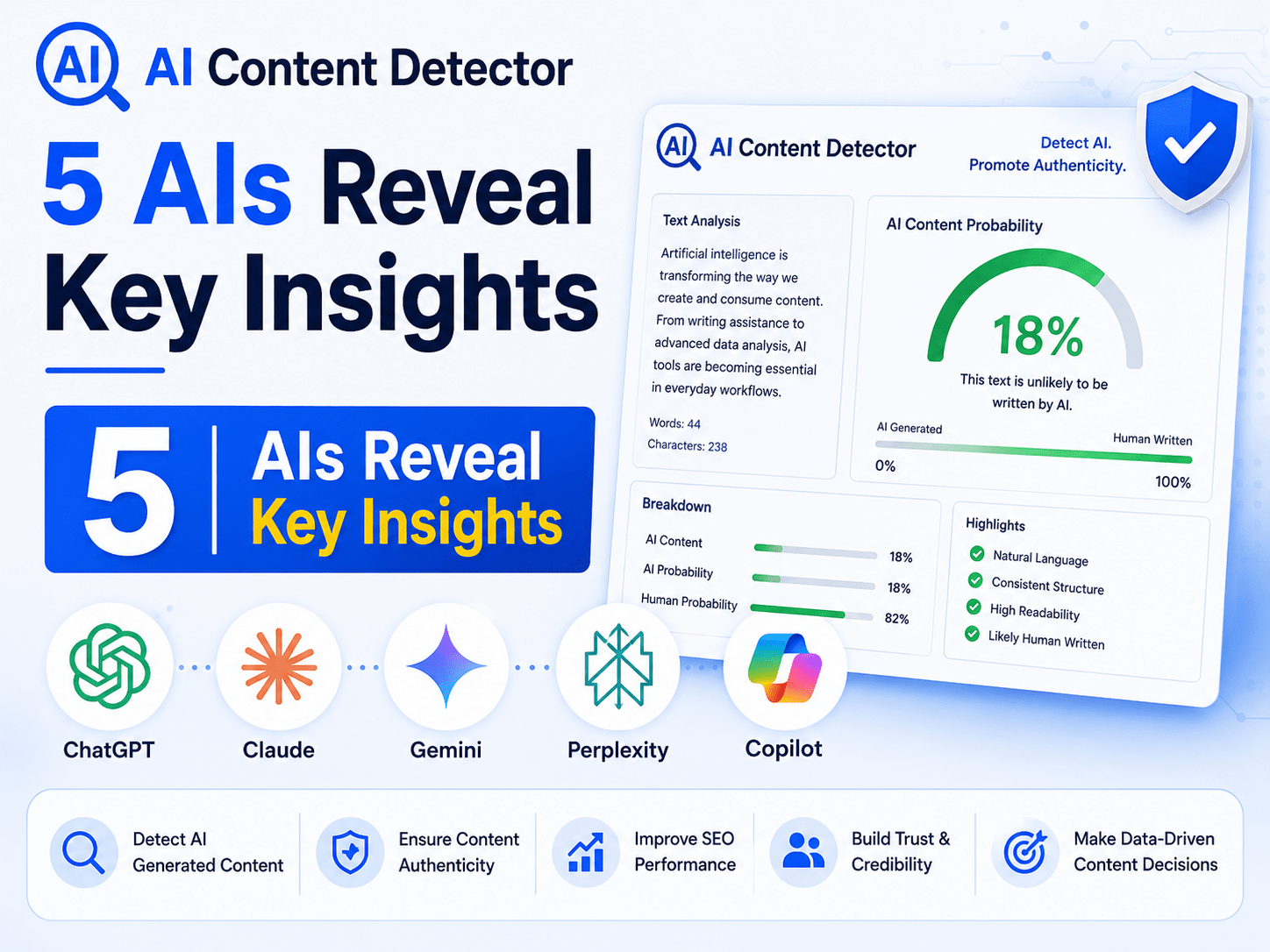
We asked OpenAI, Claude, Gemini, Mistral, and Cohere the same question and synthesized their responses into a validated consensus. Here’s what they agreed on—and where they differed.
In This Article:
This comprehensive analysis explores the future of continuous health monitoring through the lens of artificial intelligence. By examining perspectives from multiple AI systems, we provide a balanced view of how continuous health monitoring will evolve and what professionals need to know to stay ahead.
The Question Asked
How will AI agents manage your health 24/7 by 2030?
5 AI Models | 63% Avg Confidence | 97 Champion Score | HIGH Agreement |
What 5 Leading AI Models Say About AI Health Agent 24/7
AI Health Agent 24/7 is a topic where five leading AI models reached 85% consensus. According to <a href=”https://www.who.int/health-topics/digital-health” target=”_blank” rel=”noopener”>WHO – Digital Health</a>, this area is seeing rapid transformation. Continuous Monitoring Through Advanced Wearables and IoT Integration
By 2030, AI health agents will leverage sophisticated wearable sensors embedded in clothing, accessories, and potentially implanted devices to continuously collect physiological data including vital signs, glucose levels, sleep quality, activity patterns, and biomarkers.
These systems will establish personalized health baselines for each individual, accounting for genetics, lifestyle, and medical history. Smart home devices will complement wearables by monitoring environmental factors like air quality and providing medication reminders, creating a comprehensive ecosystem for real-time health tracking that seamlessly integrates into daily life.
Predictive Analytics and Early Disease Detection
AI algorithms will analyze vast amounts of personal health data to identify subtle patterns and deviations from individual baselines, enabling early detection of chronic diseases such as diabetes, cardiovascular conditions, neurodegenerative disorders, and certain cancers before traditional symptoms manifest.
Machine learning models will continuously assess risk profiles and predict potential health events, allowing for proactive preventive measures rather than reactive treatment. This shift from reactive to proactive healthcare will be supported by real-time interventions, including automated alerts to caregivers or emergency services when anomalies are detected, and dynamic adjustments to treatment protocols such as insulin dosing for diabetic patients.
Personalized Care and Mental Health Support
AI-powered virtual health assistants will provide 24/7 personalized guidance covering nutrition, exercise, stress management, and medication adherence based on each individual’s unique health profile and real-time data. These systems will offer behavioral coaching and lifestyle interventions tailored to personal patterns and goals.
Mental health support will be significantly enhanced through conversational AI capable of providing therapy, crisis intervention, mood tracking, and emotional support through interactive guided conversations. AI will also enhance telehealth by providing clinical decision support to healthcare providers, improving diagnostic accuracy and treatment recommendations while automating routine administrative tasks to allow more direct patient care time.
Implementation Challenges and Considerations
The realization of 24/7 AI health management depends on overcoming significant challenges including data privacy and security concerns under regulations like GDPR and HIPAA, bias mitigation to ensure AI recommendations serve all demographics equitably, and the development of appropriate regulatory frameworks for AI safety standards.
Success will require technological advancements in sensor accuracy and AI model sophistication, along with widespread adoption by both healthcare providers and patients. The timeline and extent of implementation remain uncertain, influenced by factors including regulatory approval processes, privacy protection mechanisms like federated learning, and the willingness of stakeholders to embrace these transformative capabilities in healthcare delivery.
🎯 5 Key Insights from 5 AI Models
- ✔ Continuous Monitoring Through Advanced Wearables and IoT Integration By 2030, AI health agents will leverage sophisticated wearable sensors embedded in clothing, accessories, and potentially implanted devices to continuously collect physiological data including vital signs, glucose levels, sleep quality, activity…
- ✔ These systems will establish personalized health baselines for each individual, accounting for genetics, lifestyle, and medical history.
- ✔ Smart home devices will complement wearables by monitoring environmental factors like air quality and providing medication reminders, creating a comprehensive ecosystem for real-time health tracking that seamlessly integrates into daily life.
- ✔ Predictive Analytics and Early Disease Detection AI algorithms will analyze vast amounts of personal health data to identify subtle patterns and deviations from individual baselines, enabling early detection of chronic diseases such as diabetes, cardiovascular conditions, neurodegenerative disorders, and…
- ✔ Machine learning models will continuously assess risk profiles and predict potential health events, allowing for proactive preventive measures rather than reactive treatment.
🏆 What OPENAI Says About Ai Health Agent 24/7
Highest-scoring response (Score: 97)
Future of AI in Health Management by 2030: Key Predictions
The integration of AI into healthcare is set to transform how health is managed, promoting a proactive approach to well-being. Here are several key areas in which AI is expected to play a pivotal role:
### 1. Personalized Health Monitoring
– Wearable Technology: Expect advanced wearables capable of continuous health monitoring, collecting data on vital signs, sleep patterns, and physical activity. AI will analyze this data in real-time, providing personalized health insights and alerts about potential health concerns.
– Smart Home Devices: AI-integrated devices will manage medication reminders and perform health status checks, enhancing adherence to treatment plans and routine health maintenance.
### 2. Predictive Analytics
– Health Predictions: AI will utilize vast datasets to predict individual health risks, identifying patterns associated with chronic diseases such as diabetes or heart conditions. Users will receive tailored lifestyle recommendations to mitigate these risks.
– Behavioral Insights: By analyzing lifestyle data, AI could offer personalized coaching and interventions aimed at promoting healthier behaviors based on one’s unique patterns.
### 3. Telehealth Enhancement
– AI-Powered Consultation: Virtual health consultations may be enhanced with AI-driven diagnostic tools. Doctors will access AI analysis to assist with decision-making, improving diagnostic accuracy and treatment strategies.
– Follow-Up Monitoring: After virtual visits, AI tools will help patients track recovery progress through symptom monitoring and adherence checks.
### 4. Mental Health Support
– AI Companions and Therapists: By 2030, chatbots and virtual mental health assistants could provide support for mental health, helping users manage stress, anxiety, or depression through interactive, guided conversations.
– Mood Tracking: AI systems will help track emotional states and suggest coping techniques or alert healthcare providers when more intervention is needed.
### 5. Data Integration and Interoperability
– Seamless Data Flow: AI will facilitate easy integration across various health systems, allowing for a holistic view of a patient’s health history. This interoperability will improve care coordination and ensure that all healthcare providers are informed and aligned on treatment plans.
– Enhanced EMRs: Electronic medical records (EMRs) will become more adaptive, automatically updating and summarizing relevant patient data, making it easier for healthcare providers to make informed decisions.
### 6. Ethical AI and Data Privacy
– Regulatory Frameworks: As AI systems become prevalent, expect strengthened regulations around data use and privacy. Ethical considerations will ensure that AI systems work transparently, protecting patient information while maximizing benefits.
– Bias Mitigation: Proactive measures will be implemented to reduce biases in AI algorithms, aiming for equitable healthcare delivery across diverse populations.
### Recommended Next Steps
– Stay Informed: Individuals should keep abreast of healing technologies and consider incorporating AI-driven health apps into their routines.
– Engage with Healthcare Providers: Discuss the potential benefits of telehealth and AI tools with healthcare professionals to understand how these can be effectively integrated into personal care plans.
– Embrace Preventative Care: Shift towards a proactive health management model that leverages AI tools for early detection and ongoing wellness monitoring.
### Conclusion
By 2030, the landscape of health management will be significantly shaped by AI technologies, fostering enhanced personalization, predictive capabilities, and improved healthcare accessibility. While some challenges remain, such as data privacy and ethical implementation, the potential for AI to revolutionize health management approaches is substantial. Engaging with these technologies can empower individuals to take charge of their health in new and impactful ways.
THE METHODOLOGY BEHIND 200+ ARTICLES
💡 Why Ai Health Agent 24/7 Matters
When multiple AI models reach 85% agreement, it signals a high-confidence answer backed by diverse training data and reasoning approaches. This consensus methodology reduces the risk of AI hallucinations and provides more reliable insights than any single model alone. Understanding the future of continuous health monitoring is essential for professionals planning their careers and organizations developing their strategies. According to the WHO – Digital Health, staying informed about emerging trends is critical for success.
“85% of AI models reached consensus on this technology question.”
🚀 Next Steps for Ai Health Agent 24/7
Ready to explore more questions about AI health agent 24/7 and continuous health monitoring? Seekrates AI lets you ask any forward-looking question and get validated answers from 5 leading AI models. Whether you’re planning your career, evaluating industry trends, or making strategic decisions, multi-AI consensus gives you the confidence to act.
🏆 Champion Agent: OPENAI (Score: 97)
Explore more Technology insights from Seekrates AI →
About This Analysis: Generated using Seekrates AI, which queries 5 leading AI models and synthesizes their responses. The 85% agreement score reflects model alignment on the core answer.
Champion: OPENAI | Category: Technology | Published: February 21, 2026
Topics: AI consensus, Technology, Artificial Intelligence, Agents, Manage, Future 2030, Future Predictions