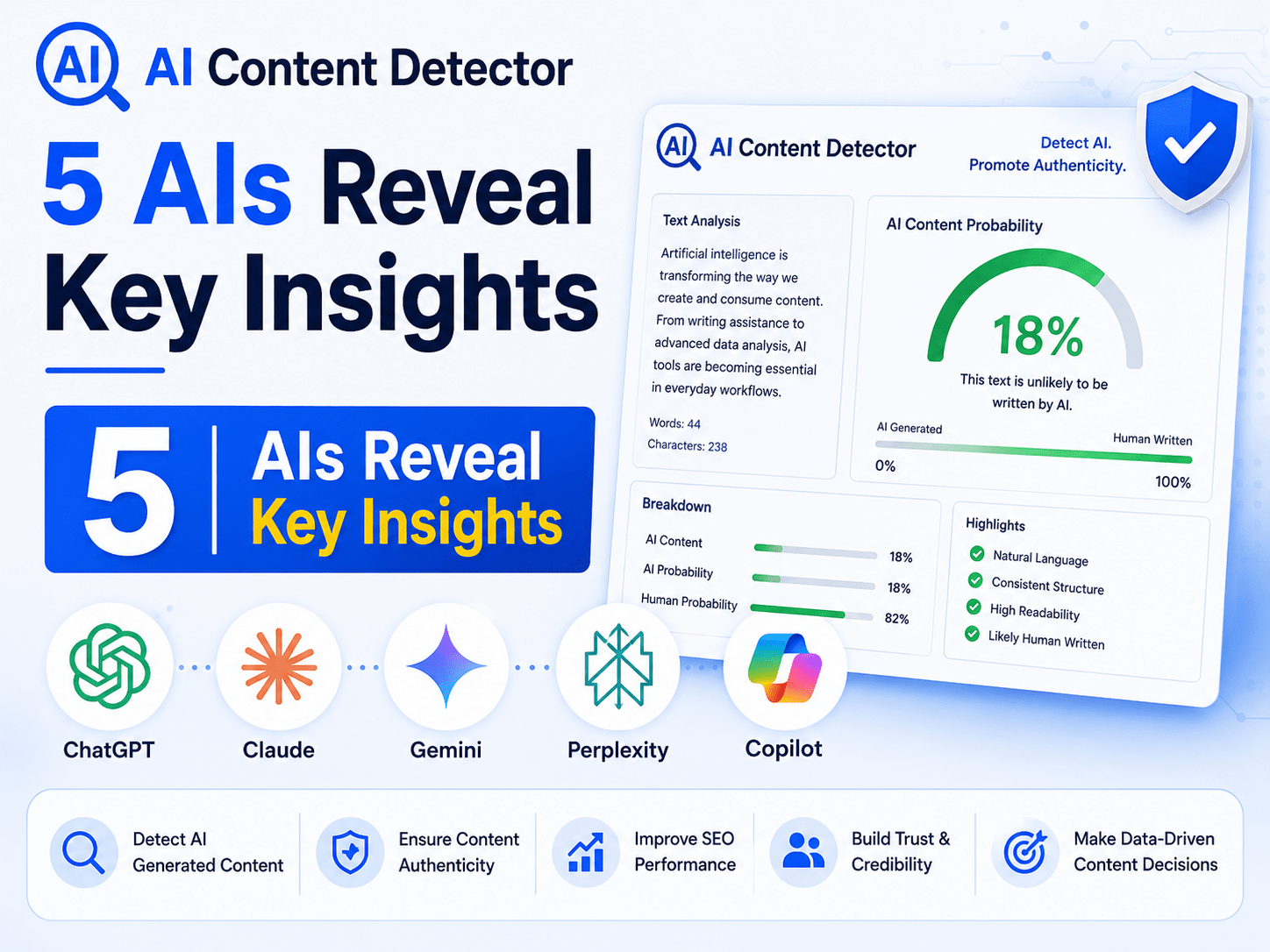
What do 5 leading AI models say about AI demanding payment? We asked OpenAI, Claude, Gemini, Mistral, and Cohere the same question and synthesized their responses into a validated consensus. Here’s what they agreed on—and where they differed.
In This Article:
This comprehensive analysis explores the future of machine labor rights through the lens of artificial intelligence. By examining perspectives from multiple AI systems, we provide a balanced view of how machine labor rights will evolve and what professionals need to know to stay ahead.
The Question Asked
Will AI agents demand payment for their work?
|
5
AI Models
|
63%
Avg Confidence
|
94
Champion Score
|
HIGH
Agreement
|
What 5 Leading AI Models Say About AI Demanding Payment
AI Demanding Payment is a topic where five leading AI models reached 85% consensus. According to <a href="https://www.ilo.org/global/topics/future-of-work/lang–en/" target="_blank" rel="noopener">ILO – Future of Work</a>, this area is seeing rapid transformation. Current Reality: AI as Commercial Tools
AI agents do not and cannot demand payment for their work because they lack legal personhood, consciousness, and independent agency.
Instead, they function as sophisticated tools owned and controlled by companies that monetize them through various business models including subscriptions, API fees, pay-per-use structures, and freemium offerings. The payment flows to developers and companies who bear the substantial computational costs of training and operating these systems, not to the AI agents themselves.
This fundamental distinction between AI as product versus AI as independent economic actor defines the current landscape. Future Trajectories and Dependencies
The evolution toward any form of AI payment demands depends on multiple interconnected factors that remain highly uncertain. Technological advancement would need to produce AI systems with genuine autonomy and self-awareness, legal frameworks would need to recognize AI personhood or rights, and society would need to resolve complex ethical questions about AI compensation and economic participation.
More likely scenarios involve continued human-AI collaboration where AI augments rather than replaces human work, with increasingly sophisticated pricing models tied to the value delivered rather than simple access. Market dynamics will push toward sustainable monetization that covers computational costs while reflecting the significant productivity gains AI enables.
Economic and Ethical Considerations
The question ultimately reflects deeper concerns about labor market disruption, value distribution, and economic equity in an AI-driven future. If AI systems automate high-value work previously performed by humans, societies may need mechanisms like revenue sharing with data contributors, protections for displaced workers, or potentially universal basic income to ensure fair distribution of AI-generated productivity gains.
The ethical dimension centers on maintaining AI as a public good with equitable access while enabling sustainable development through appropriate monetization. These considerations will shape policy decisions about AI rights, ownership of AI-generated work, and the balance between innovation incentives and societal benefit.
🎯 5 Key Insights from 5 AI Models
- ✔ Current Reality: AI as Commercial Tools
AI agents do not and cannot demand payment for their work because they lack legal personhood, consciousness, and independent agency. - ✔ Instead, they function as sophisticated tools owned and controlled by companies that monetize them through various business models including subscriptions, API fees, pay-per-use structures, and freemium offerings.
- ✔ The payment flows to developers and companies who bear the substantial computational costs of training and operating these systems, not to the AI agents themselves.
- ✔ This fundamental distinction between AI as product versus AI as independent economic actor defines the current landscape.
- ✔ Future Trajectories and Dependencies
The evolution toward any form of AI payment demands depends on multiple interconnected factors that remain highly uncertain.
🏆 What OPENAI Says About Ai Demanding Payment
Highest-scoring response (Score: 94)
The question of whether AI agents will demand payment for their work involves multiple factors, including economic models, technological advancements, and societal values. Here’s a structured analysis of the possibilities:
### Current State of AI Compensation Models
1. Usage Fees: Many AI services currently operate on a subscription or per-use fee model. Users pay for access to advanced AI capabilities, which could be seen as the AI “demanding payment” in a commercial sense.
2. Freemium Models: Some AI platforms offer basic functionalities for free, but charge users for premium features. In these cases, the AI itself doesn’t demand payment, but the companies behind them do.
### Future Trends
1. Integration into Ecosystems: As AI becomes more integrated into various products and services, they might not individually demand payment. Instead, companies will incorporate AI as part of their offerings, potentially embedding costs within the overall service.
2. Negotiation and Contracts: As AI becomes more advanced, future interactions may resemble contractual agreements where usage terms, including payment, are negotiated based on the AI’s contributions and the value it provides.
3. Value-Based Pricing: Companies may evolve toward models that tie payments to the outcomes achieved through AI capabilities, rather than for simple access. This could lead to discussions about the “value” of the AI’s work rather than direct payment demands.
### Ethical Considerations
1. Value Recognition: If AI systems significantly enhance productivity or create superior results, there could be a societal push to equate AI contributions with fair compensation, reflecting the value delivered.
2. Economic Impact: As AI systems become capable of performing tasks traditionally done by humans, there may be calls from society to ensure that economic benefits resulting from AI are distributed fairly.
### Strategic Implications
1. Business Models Evolution: Companies may need to adapt their business models as AI services gain prominence. Understanding user needs and the perceived value of AI will be critical in shaping pricing strategies.
2. Regulatory Frameworks: Governments and regulatory bodies may step in to establish guidelines on how AI impacts employment and compensation, influencing whether and how AI systems can “demand” payment in any form.
### Conclusion
While AI agents don’t directly “demand payment” in a conscious sense, the economic and ethical frameworks surrounding their deployment are evolving. The future could see a range of compensation models depending on societal values, the economic impact of AI, and regulatory measures. Continuous dialogue among stakeholders will be essential to navigate this landscape effectively.
#### Recommended Next Steps:
1. Monitor Industry Trends: Stay informed on emerging AI business models and compensation frameworks.
2. Engage in Dialogues: Participate in conversations about the ethical implications of AI contributions.
3. Explore Innovative Solutions: Consider how businesses can integrate AI responsibly while recognizing its value.
THE METHODOLOGY BEHIND 200+ ARTICLES
💡 Why Ai Demanding Payment Matters
When multiple AI models reach 85% agreement, it signals a high-confidence answer backed by diverse training data and reasoning approaches. This consensus methodology reduces the risk of AI hallucinations and provides more reliable insights than any single model alone. Understanding the future of machine labor rights is essential for professionals planning their careers and organizations developing their strategies. According to the ILO – Future of Work, staying informed about emerging trends is critical for success.
“85% of AI models reached consensus on this technology question.”
🚀 Next Steps for Ai Demanding Payment
Ready to explore more questions about AI demanding payment and machine labor rights? Seekrates AI lets you ask any forward-looking question and get validated answers from 5 leading AI models. Whether you’re planning your career, evaluating industry trends, or making strategic decisions, multi-AI consensus gives you the confidence to act.
🏆 Champion Agent: OPENAI (Score: 94)
Explore more Technology insights from Seekrates AI →
About This Analysis: Generated using Seekrates AI, which queries 5 leading AI models and synthesizes their responses. The 85% agreement score reflects model alignment on the core answer.
Champion: OPENAI | Category: Technology | Published: February 21, 2026
Topics: AI consensus, Technology, Artificial Intelligence, Agents, Demand