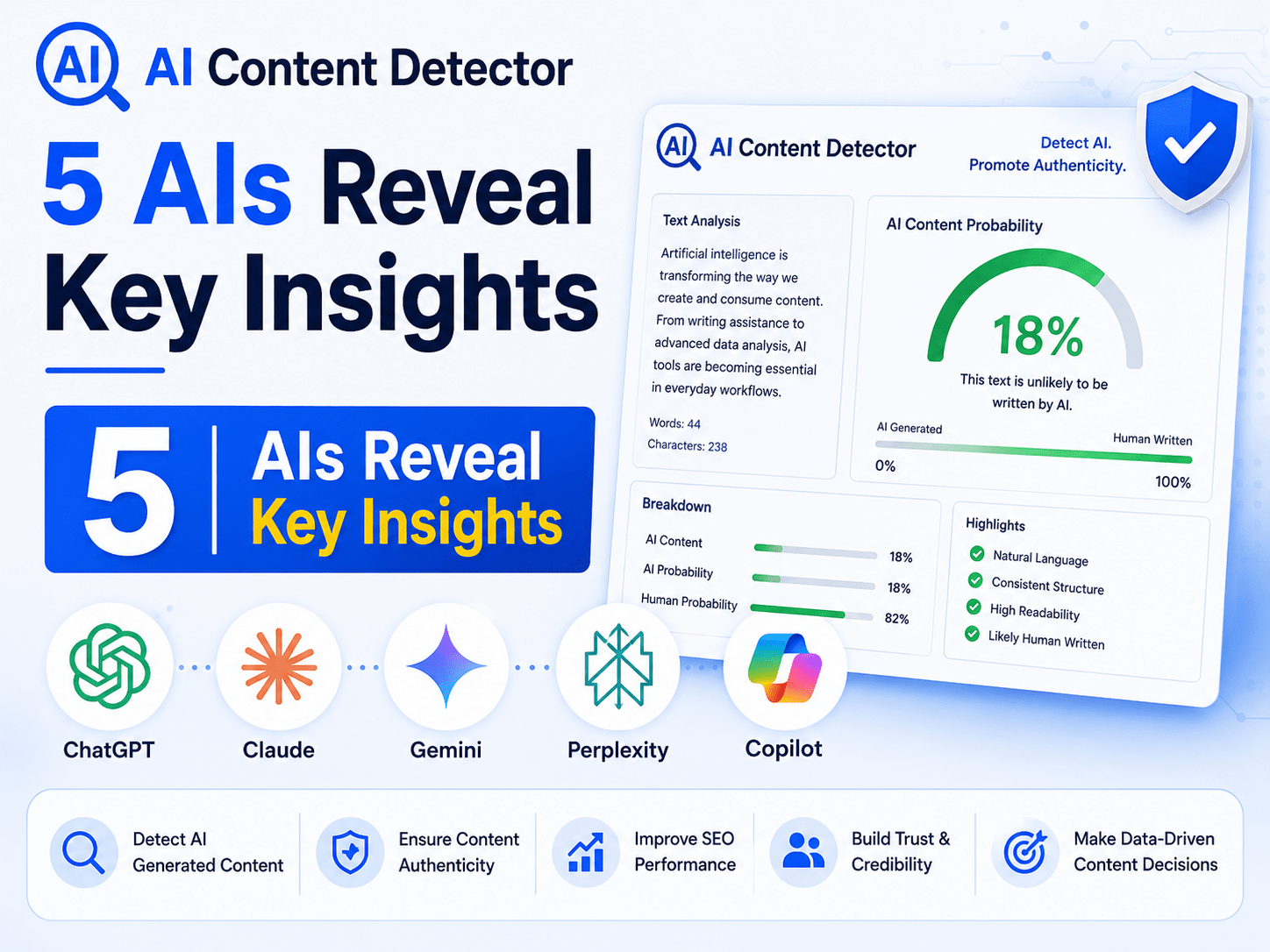
What do 5 leading AI models say about AI political candidates? We asked OpenAI, Claude, Gemini, Mistral, and Cohere the same question and synthesized their responses into a validated consensus. Here’s what they agreed on—and where they differed.
In This Article:
This comprehensive analysis explores the future of AI governance through the lens of artificial intelligence. By examining perspectives from multiple AI systems, we provide a balanced view of how AI governance will evolve and what professionals need to know to stay ahead.
The Question Asked
Will AI agents run for political office by 2035?
|
5
AI Models
|
61%
Avg Confidence
|
97
Champion Score
|
HIGH
Agreement
|
What 5 Leading AI Models Say About AI Political Candidates
AI Political Candidates is a topic where five leading AI models reached 85% consensus. According to <a href="https://www.brookings.edu/topic/artificial-intelligence/" target="_blank" rel="noopener">Brookings Institution – AI</a>, this area is seeing rapid transformation. Technical and Cognitive Limitations
While AI technology is advancing rapidly in areas like natural language processing and data analysis, current AI systems lack critical capabilities required for political office.
AI agents cannot genuinely understand complex human emotions, social dynamics, or the nuanced ethical considerations that govern political decision-making. True artificial general intelligence (AGI) with consciousness, empathy, and independent moral reasoning would be necessary for an AI to effectively serve in political office.
By 2035, these capabilities are unlikely to be sufficiently developed, though AI will continue to excel in supporting roles such as campaign management, voter analysis, and policy research. Legal and Constitutional Barriers
Fundamental legal obstacles prevent AI political candidacy across all jurisdictions.
Constitutional frameworks and electoral laws universally require candidates to be human citizens, with specific requirements around age, residency, and nationality. No country currently grants legal personhood to AI entities in a manner that would enable them to hold office. Amending these frameworks would require unprecedented constitutional reforms and face significant public and legislative resistance.
The legal infrastructure to support AI candidacy—including questions of accountability, liability, and representation—would need to be entirely reimagined, a process unlikely to be completed by 2035. Public Trust and Ethical Concerns
Public acceptance represents perhaps the most significant barrier to AI political candidates.
Voters would need to overcome deep concerns about transparency, accountability, manipulation, and the concentration of power in the hands of those who control the AI. Politics fundamentally relies on personal connection, trust, and the authentic human experience—qualities that AI cannot replicate.
Ethical questions about whether AI can truly represent human interests, avoid bias from training data or creators, and make decisions that balance efficiency with human values remain unresolved. While some segments of society frustrated with political polarization might theoretically be open to unconventional candidates, widespread acceptance of AI in positions of political power is highly unlikely within this timeframe.
Most Probable Outcome by 2035
The consensus scenario involves AI playing increasingly influential but indirect roles in politics. AI systems will likely serve as sophisticated advisors, analytical tools, and campaign management platforms for human candidates. Some jurisdictions may experiment with AI in very limited, low-stakes elected positions as proof-of-concept initiatives, but these will not achieve mainstream adoption.
AI may also function as symbolic representatives of specific ideologies or operate through human proxies with AI-driven policy platforms. However, AI agents independently running for and holding significant political office by 2035 remains highly improbable due to the convergence of technical limitations, legal barriers, and societal resistance.
🎯 5 Key Insights from 5 AI Models
- ✔ Technical and Cognitive Limitations
While AI technology is advancing rapidly in areas like natural language processing and data analysis, current AI systems lack critical capabilities required for political office. - ✔ AI agents cannot genuinely understand complex human emotions, social dynamics, or the nuanced ethical considerations that govern political decision-making.
- ✔ True artificial general intelligence (AGI) with consciousness, empathy, and independent moral reasoning would be necessary for an AI to effectively serve in political office.
- ✔ By 2035, these capabilities are unlikely to be sufficiently developed, though AI will continue to excel in supporting roles such as campaign management, voter analysis, and policy research.
- ✔ Legal and Constitutional Barriers
Fundamental legal obstacles prevent AI political candidacy across all jurisdictions.
🏆 What OPENAI Says About Ai Political Candidates
Highest-scoring response (Score: 97)
AI Agents Running for Political Office by 2035: An Analysis
Current Landscape of AI and Politics
– As of now, AI technology is increasingly present in various aspects of governance and political processes, such as data analysis, public opinion tracking, and even drafting policy proposals.
– However, running for political office involves not only decision-making but also ethical considerations, representation, and human emotions—areas where AI still encounters significant limitations.
Trends Indicating Future Political Roles for AI
1. Automation of Campaign Operations:
– AI systems can manage campaigns, analyze voter behavior, and optimize outreach strategies. This has already been seen in political campaigns where AI is utilized to target voters more effectively.
2. Public Acceptance of AI:
– As societies become more accustomed to AI in daily life, there is a possibility that acceptance could extend to AI agents in governance roles. This will depend heavily on public perception of AI ethics and fairness.
3. Legal Changes:
– Evolution of laws regarding political candidacy, especially for non-human entities, could pave the way for AI to have a formal role in politics. However, as of now, most legal frameworks reserve candidacy for human beings.
Challenges and Considerations
– Ethical and Moral Implications:
– Many questions arise about accountability, transparency, and the ethical implications of an AI holding a political office where decisions affect human lives.
– Public Trust:
– Gaining public trust would be a significant hurdle. Politics relies heavily on personal connection and trust, aspects where AI lacks the authentic human experience.
– Technological Limitations:
– While AI can process data and make predictions based on trends, it lacks the ability to understand complex human emotions and social dynamics that are crucial in governance.
Possible Future Scenarios by 2035
1. Advisory Role:
– AI agents may serve as advisors to elected officials, providing data-driven insights while leaving the decision-making to humans.
2. Sponsorship of Human Candidates:
– AI could back human candidates through identified support, funding strategies, and targeted outreach, enhancing campaign effectiveness.
3. Symbolic Representation:
– In some cases, symbolic AI candidates might emerge as a way for people to express their views on technology’s role in society, prompting discussions around policy that incorporates AI into governance.
Conclusion and Key Takeaways
– While it is unlikely that AI agents will run for office as independent candidates by 2035, their role will likely evolve into a supportive and advisory function in political campaigns and governance.
– The interplay between technological advancements, societal acceptance, and legal frameworks will determine the actual extent of AI in political roles in the coming decade.
Next Steps:
– Monitor advancements in AI technology and public perception of AI in governance.
– Engage in discussions on ethical frameworks for AI to possibly pave the way for future roles in politics.
– Consider legal frameworks that may evolve to address AI governance, and participate in civic discussions about technology in politics.
THE METHODOLOGY BEHIND 200+ ARTICLES
💡 Why Ai Political Candidates Matters
When multiple AI models reach 85% agreement, it signals a high-confidence answer backed by diverse training data and reasoning approaches. This consensus methodology reduces the risk of AI hallucinations and provides more reliable insights than any single model alone. Understanding the future of AI governance is essential for professionals planning their careers and organizations developing their strategies. According to the Brookings Institution – AI, staying informed about emerging trends is critical for success.
“85% of AI models reached consensus on this technology question.”
🚀 Next Steps for Ai Political Candidates
Ready to explore more questions about AI political candidates and AI governance? Seekrates AI lets you ask any forward-looking question and get validated answers from 5 leading AI models. Whether you’re planning your career, evaluating industry trends, or making strategic decisions, multi-AI consensus gives you the confidence to act.
🏆 Champion Agent: OPENAI (Score: 97)
Explore more Technology insights from Seekrates AI →
About This Analysis: Generated using Seekrates AI, which queries 5 leading AI models and synthesizes their responses. The 85% agreement score reflects model alignment on the core answer.
Champion: OPENAI | Category: Technology | Published: February 21, 2026
Topics: AI consensus, Technology, Artificial Intelligence, Agents, Political, Future 2035, Future Predictions