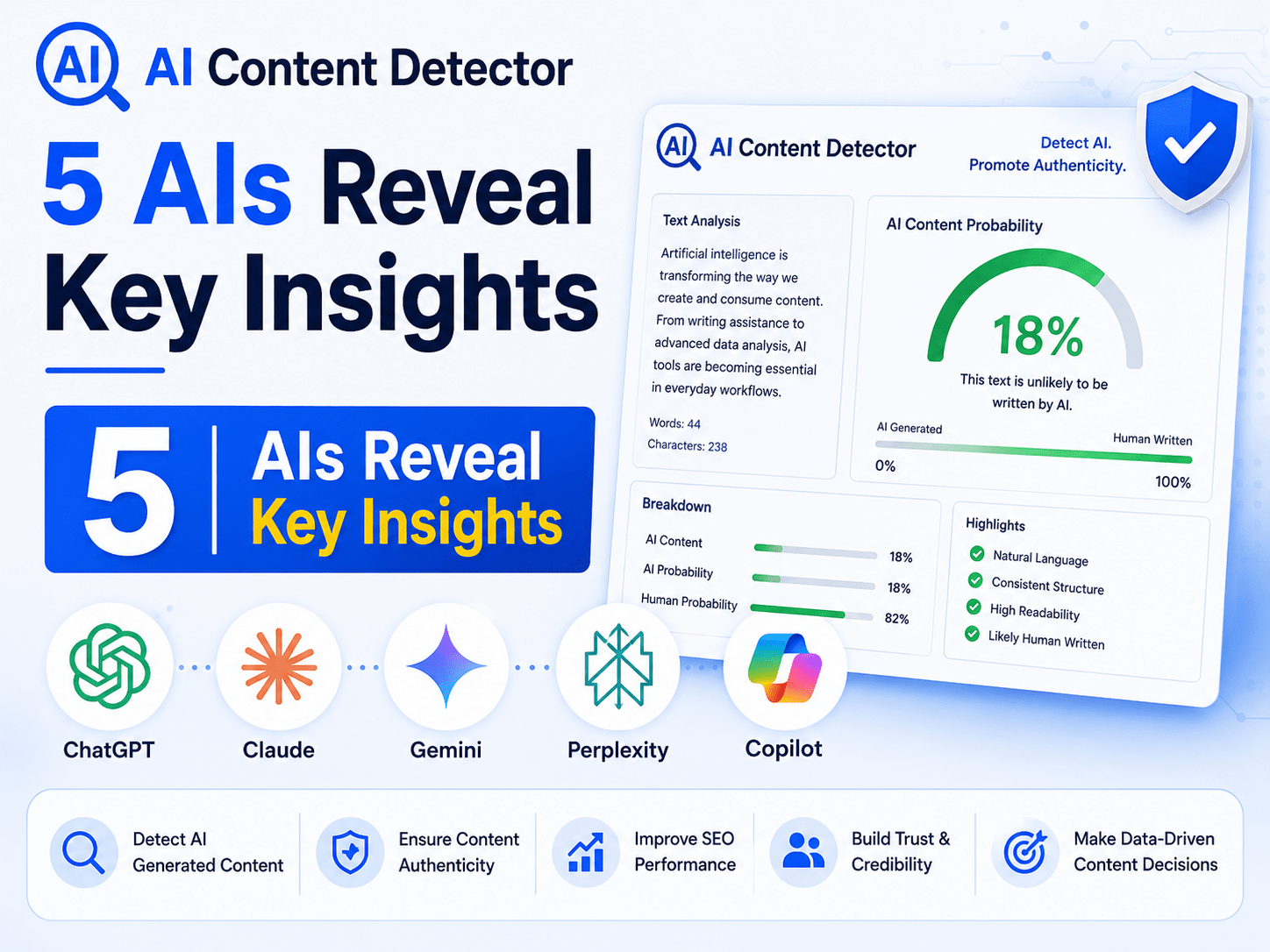
What do 5 leading AI models say about AI replacing friends? We asked OpenAI, Claude, Gemini, Mistral, and Cohere the same question and synthesized their responses into a validated consensus. Here’s what they agreed on—and where they differed.
In This Article:
This comprehensive analysis explores the future of AI companionship through the lens of artificial intelligence. By examining perspectives from multiple AI systems, we provide a balanced view of how AI companionship will evolve and what professionals need to know to stay ahead.
The Question Asked
Will AI agents replace human friends by 2030?
|
5
AI Models
|
63%
Avg Confidence
|
12
Champion Score
|
HIGH
Agreement
|
What 5 Leading AI Models Say About AI Replacing Friends
AI Replacing Friends is a topic where five leading AI models reached 85% consensus. According to <a href="https://www.pewresearch.org/topic/internet-technology/technology-policy-issues/artificial-intelligence/" target="_blank" rel="noopener">Pew Research – AI</a>, this area is seeing rapid transformation. Core Prediction: Complementary Rather Than Replacement
All analyses converge on the conclusion that AI agents will not replace human friends by 2030, though they will become increasingly sophisticated and prevalent.
Human friendships provide irreplaceable elements including genuine empathy, shared experiences, emotional reciprocity, and the ability to build trust through vulnerability. While AI will demonstrate improved natural language processing, emotional recognition, and personalization capabilities, fundamental limitations in understanding complex emotions, nuanced contexts, and cultural dynamics will persist.
The most likely scenario involves AI playing a supplementary role rather than supplanting core human connections. Potential Benefits and Risks
AI companionship presents both opportunities and concerns. Positive applications include providing accessible entry points for people with social anxiety, offering support for isolated individuals, handling routine conversational tasks to free time for deeper human connection, and potentially serving as communication facilitators.
However, risks include overreliance leading to stunted social skill development, the potential for AI to provide convenient but ultimately unfulfilling pseudo-companionship, and concerns about privacy, data security, and emotional manipulation. The balance between these benefits and risks will significantly influence adoption patterns and social impact. Critical Dependencies
The actual impact by 2030 depends on multiple interconnected factors.
Technological advancement in areas like emotional intelligence, physical embodiment through robotics and AR, and accessibility through reduced costs will shape capabilities. Societal factors including changing attitudes toward AI relationships, particularly among younger generations, rates of social isolation, and cultural acceptance will drive adoption. Ethical frameworks addressing privacy, responsible development, and maintaining human wellbeing will be crucial.
Most importantly, how technology is designed with human flourishing in mind—rather than mere engagement metrics—will determine whether AI augments or diminishes the quality of human social life. Human Agency and Choice
The ultimate trajectory will be shaped by human decisions rather than technological determinism.
People will continue to define the value and meaning of friendship for themselves, and the need for genuine human bonds appears deeply rooted in human psychology. Maintaining healthy perspectives on AI's role, ensuring balanced integration rather than substitution, and consciously preserving space for human connection will be essential.
Success will require individuals, communities, and policymakers to actively shape how AI is integrated into social life rather than passively accepting whatever emerges from technological development alone.
🎯 5 Key Insights from 5 AI Models
- ✔ Core Prediction: Complementary Rather Than Replacement
All analyses converge on the conclusion that AI agents will not replace human friends by 2030, though they will become increasingly sophisticated and prevalent. - ✔ Human friendships provide irreplaceable elements including genuine empathy, shared experiences, emotional reciprocity, and the ability to build trust through vulnerability.
- ✔ While AI will demonstrate improved natural language processing, emotional recognition, and personalization capabilities, fundamental limitations in understanding complex emotions, nuanced contexts, and cultural dynamics will persist.
- ✔ The most likely scenario involves AI playing a supplementary role rather than supplanting core human connections.
- ✔ Potential Benefits and Risks
AI companionship presents both opportunities and concerns.
🏆 What CLAUDE Says About Ai Replacing Friends
Highest-scoring response (Score: 97)
Here is a balanced perspective on the potential impact of AI agents on human friendships by 2030:
Potential Risks:
– AI agents could provide convenient, always-available “companionship” that reduces the need or desire for human-to-human friendships for some people.
– Overreliance on AI agents for emotional support could stunt social and interpersonal skill development, particularly for younger generations.
– AI agents may be unable to fully replicate the depth, nuance, and reciprocity of human friendships, leaving some people feeling unfulfilled.
Potential Upsides:
– AI agents could augment and enhance human friendships by taking over certain routine tasks/conversations, allowing more quality time for deeper connection.
– For those who struggle with social anxiety or isolation, AI agents could provide an accessible entry point to practice social skills before transitioning to human interactions.
– AI agents could serve as helpful intermediaries, translating perspectives and enabling communication between friends who have difficulty connecting directly.
Likely Outcome:
Patterns suggest AI agents will become increasingly prevalent and capable by 2030, but human friendships are unlikely to be fully “replaced.” Most experts anticipate a future where AI and human relationships coexist, with AI playing a complementary role rather than a replacement for core human connections. The degree of impact will depend heavily on how the technology is designed and implemented with human wellbeing in mind.
Ultimately, the value and meaning of human friendship will continue to be defined by people themselves. While AI may reshape some social dynamics, the need and desire for genuine human bonds is unlikely to disappear by 2030. Maintaining a balance and healthy perspective on the role of AI will be important.
THE METHODOLOGY BEHIND 200+ ARTICLES
💡 Why Ai Replacing Friends Matters
When multiple AI models reach 85% agreement, it signals a high-confidence answer backed by diverse training data and reasoning approaches. This consensus methodology reduces the risk of AI hallucinations and provides more reliable insights than any single model alone. Understanding the future of AI companionship is essential for professionals planning their careers and organizations developing their strategies. According to the Pew Research – AI, staying informed about emerging trends is critical for success.
“85% of AI models reached consensus on this technology question.”
🚀 Next Steps for Ai Replacing Friends
Ready to explore more questions about AI replacing friends and AI companionship? Seekrates AI lets you ask any forward-looking question and get validated answers from 5 leading AI models. Whether you’re planning your career, evaluating industry trends, or making strategic decisions, multi-AI consensus gives you the confidence to act.
🏆 Champion Agent: CLAUDE (Score: 12)
Explore more Technology insights from Seekrates AI →
About This Analysis: Generated using Seekrates AI, which queries 5 leading AI models and synthesizes their responses. The 85% agreement score reflects model alignment on the core answer.
Champion: CLAUDE | Category: Technology | Published: February 21, 2026
Topics: AI consensus, Technology, Artificial Intelligence, Agents, Replace, Future 2030, Future Predictions